Last Update:
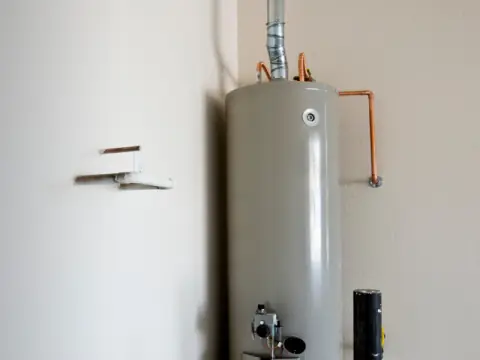
Waking up to a cold shower is annoying enough without also having to work out whether it's worth fixing your hot water system or time to replace it. The honest answer depends on a handful of specific things, and once you know what they are, the decision is usually pretty clear.
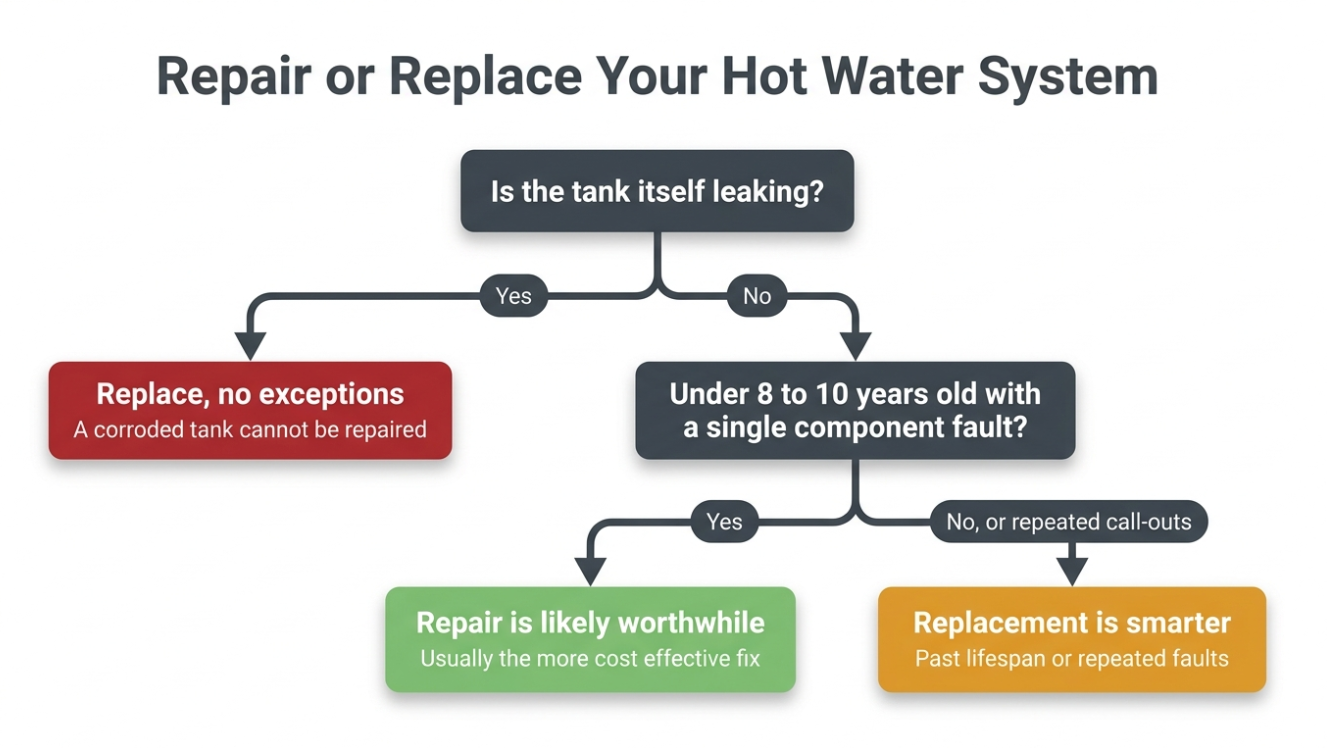
Here's the short version. If the tank itself is leaking, there's no real decision to make, it's always a replace, since a corroded tank can't be safely repaired. For everything else, it generally comes down to your system's age against its typical lifespan, whether the repair cost is creeping toward half the price of a new unit, and whether this is a one-off fault or your second or third call-out for the same problem. Here's how to work through it properly.
The one situation where there's no real decision
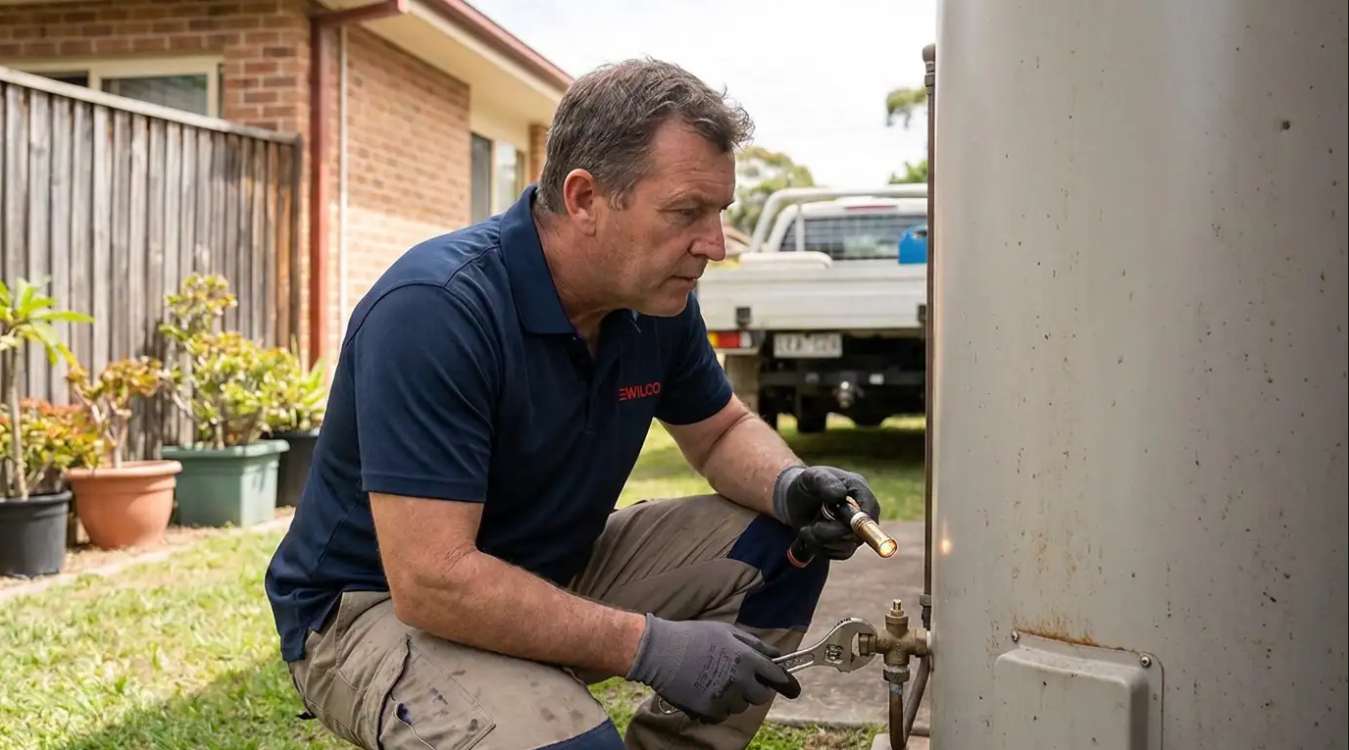
If your hot water tank itself is leaking, water pooling around the base or visible corrosion on the tank body, replacement is the only real option, regardless of the system's age. Once the inner tank has corroded through, there's no safe or lasting way to patch it. Trying to repair a leaking tank is, at best, a short-term delay before you're back to replacing it anyway.
When repair genuinely makes sense
If your system is under 8 to 10 years old and the fault traces back to a single component rather than the tank itself, repair is usually the sensible first move.
Common, genuinely repairable faults include a faulty thermostat or heating element on electric systems, a pilot light, ignition or thermocouple issue on gas systems, a worn tempering or pressure relief valve, sediment buildup affecting performance, or an anode that simply needs replacing. In Sydney, most straightforward repairs like these typically cost between $150 and $600, with more involved component failures running from $600 up to $1,200 or more depending on the part and system type.
When replacement is the smarter call
A few clear signals tip the decision toward replacement, even when a repair is technically possible.
Your system is past its typical lifespan. As a general guide, electric storage systems typically last 8 to 12 years, gas storage systems 10 to 15 years, continuous flow gas systems 15 to 20 years, heat pumps 10 to 15 years, and solar systems 15 to 25 years. A system nearing or past this range that develops a fault is usually better replaced than repeatedly patched.
You've had repeated call-outs for the same system. If this is your second or third repair in a short space of time, that pattern usually points to a unit that's failing overall, not one fixable fault.
The repair quote is creeping toward half the price of a new system. This is a genuinely useful rule of thumb: once a repair cost approaches 50% of what a replacement would cost, the maths generally favours replacing rather than repairing.
The fault involves gas or electrical safety. Issues like gas leaks, faulty wiring, or pressure problems should always be treated cautiously. Even where a repair looks technically possible, replacement is often the more responsible choice for anything safety-related.
What it actually costs in Sydney
As a general guide to current Sydney pricing: most common hot water repairs run $150 to $600, with major component work reaching $600 to $1,200 or more. A full replacement typically starts from around $900 for a basic electric storage unit, rising to several thousand dollars for larger gas, solar or heat pump systems, depending on size and installation complexity.
It's worth knowing that water heating is one of the largest single contributors to household energy use, commonly cited in the range of 15 to 30%, so an old, inefficient system has a real ongoing cost beyond just the repair bill. If you're weighing up an upgrade to a more efficient system like a heat pump, it's worth checking whether any current NSW rebates apply, since these can meaningfully reduce the upfront cost of upgrading.
A properly compliant hot water installation also involves more than simply swapping the tank: removal and disposal of the old unit, correct valves, compliant pipework, and for gas systems, testing and a gas compliance certificate. If a quote looks unusually cheap, it's worth checking whether these are actually included.
Frequently asked questions
My hot water system stopped working, should I repair or replace it?
It depends on what's actually wrong. If the tank itself is leaking, replacement is the only real option. If the fault is a single component, like a thermostat, heating element or valve, and your system is under 8 to 10 years old, repair is usually the sensible and more cost-effective choice. If your system is old, has had repeated repairs, or the repair quote is approaching half the price of a new unit, replacement is generally the smarter long-term call.
How do I know if my hot water tank is leaking versus a minor plumbing leak?
Water pooling directly around the base of the tank, or visible rust and corrosion on the tank body itself, generally indicates the tank is compromised. A leak from a fitting, valve or connected pipe, rather than the tank itself, can often be repaired without needing to replace the whole system. A licensed plumber can quickly tell the difference on an on-site inspection.
How much does it cost to repair a hot water system in Sydney?
Most common repairs cost between $150 and $600, covering things like a thermostat, heating element, valve or ignition component. More involved repairs can run from $600 to $1,200 or more, depending on the fault and system type. Getting an on-site diagnosis is the only way to know the exact cost for your specific issue.
How long should a hot water system last before needing replacement?
Typical lifespans vary by type: 8 to 12 years for electric storage, 10 to 15 years for gas storage, 15 to 20 years for continuous flow gas, 10 to 15 years for heat pumps, and 15 to 25 years for solar systems. A system nearing or past this range that develops a fault is usually a better candidate for replacement than ongoing repairs.
Is it worth repairing an old hot water system if it's still working?
Generally, once a system is approaching or past its typical lifespan, it's worth thinking carefully before committing to a repair on a new fault, even if the system has otherwise been reliable. Older systems tend to fail again soon after a repair, and they're also less energy efficient, so you may be paying more on running costs in the meantime as well.
Is a same-day hot water repair or replacement possible in Sydney?
Often, yes, particularly for straightforward component repairs or a like-for-like replacement, which commonly takes a few hours once the correct unit and parts are available. For genuine emergencies, such as no hot water at all or a leaking tank, same-day service is usually available.
Get an honest, on-site assessment
The only way to know for certain whether your system is worth repairing is a proper look at what's actually gone wrong.
Wilco Plumbing offers 24/7 hot water services across Sydney, with a $0 callout fee and upfront fixed pricing, so you know the cost before any work begins. Call (02) 9186 3371 for an honest assessment, or get in touch online. If your hot water issue has escalated into a burst pipe or active leak, our guide on what to do in a burst pipe emergency covers the immediate steps to take.
Prices in this guide are typical Sydney market ranges current at the time of writing and are provided as a general guide only, they are not a quote. Actual costs depend on your specific system and fault. Contact a licensed plumber for a fixed price.